
FIRE PREVENTION IN EUROPE

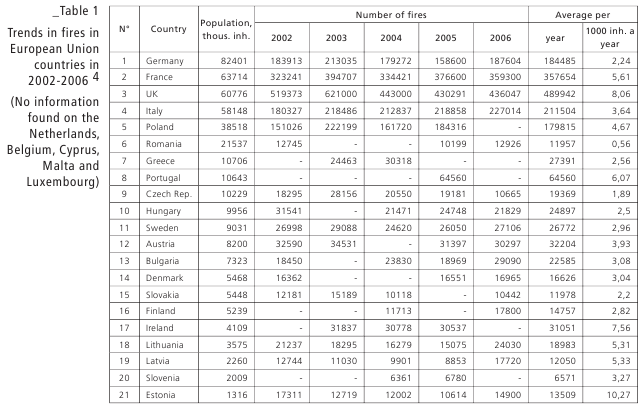
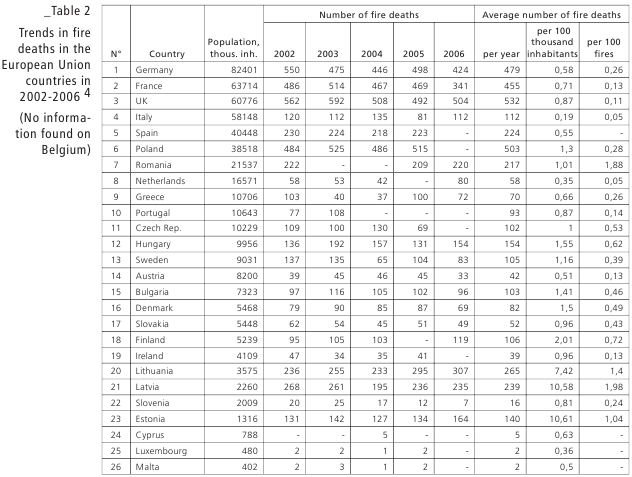
Fires are a main cause of death casualties in accidents and cause major damage. It is believed that every year alone 1% of all inhabitants of the European Union are affected by burns. Prevention is the only answer and costs always less than to end fires. But there is no single policy for fire prevention and fire protection in the European Union. One volcano sparks the discussion on a better flight control coordination in the EU, but the everyday news about fires is not able to reach a unified approach in preventing fires. Currently fire detectors, fire extinguishers and sprinkler systems remain the most effective means of fire prevention and protection. But most Europeans still do not use the available means or ignore their need and importance in fire prevention. The lack of European legal harmonization and a common regulatory framework causes avoidable casualties and damages from fires. This article sets out what Europe already has done in fire prevention, what it could do and highlights Luxembourg’s case. FIRE PREVENTION IN EUROPE_Accidents are the most terrifying causes for death. Beside the shock effect accidents have on victims, the frightening part is that accidents are the main killers for people younger than 30 years old1. Whoever Not only from a personal perspective avoiding accidents makes a lot of sense, but also for the society as a whole in-creased security is a stabilizing factor. The recently adopted Internal Security Strategy for the European Union aims protecting people and the values of freedom and democracy, so that everyone can enjoy their daily lives without fear. The consequence of this strategy is a strong emphasis on prevention measures to prevent in particular human made disasters. Besides car accidents, falls and drowning, fire accidents are still too common. Each year an estimated two and a half million fires kill about twenty five thousand people in Europe alone while injuring another five hundred thousand. Such high loss of life and injuries is a shame as one knows that it is rather easy to take measures, while 80% of fatalities occur in private homes.2 And it is believed that the number of man made fires is much larger than the number of ? res caused by technical malfunctions. In fact smoking and cooking take the leading place among causes of fires at homes. And most of the fatalities occur at night while people are at sleep. It is too ridiculous for words that in general European politicians do not give higher priority to fire prevention. Important causes of death like diabetics and asthma suffer from the lack 1. Fire incidents in Europe Fire prevention is a typical area in which European countries have different and uncoordinated policies. Even official fire statistics at a European level do not exist. National statistics do exist, but are based on different assumptions from country to country. What is known is that every year five million people or 1% of the all people in the European Union are affected by burns, of which seventy thousand get seriously injured and need hospitalisation. A hidden issue is that young people are the most affected by burns. American statistics shows that in 40% of cases fire victims are younger than 21 years old. The number of fires and the number of victims vary widely in EU member states 3. The largest average number of fires per 1000 inhabitants is observed in Estonia (10.27), followed by Britain (8.06), Ireland (7.56), Portugal (6.07) and France (5.61). Statistically the lowest number of fires is recorded in Romania (0.56), the Czech Republic (1.89), Slovakia (2.20), Germany (2.24) and Hungary (2.50). But probably this says more about the peculiarities and imperfections of national statistical data then about fires taking place. Table 1 Fire is a major cause of deaths and injuries. Statistics indicates that on average each year in European countries more than 4200 people become the victims of fires. Average absolute number of victims was the largest in the UK, Poland, Germany and France. However, the number of victims per million inhabitants in these countries is not the largest. The highest risk to get killed by ? re is in Estonia (10.61 victims per million inhabitants), Latvia (10.58) and Lithuania (7.42). Most of the victims per 100 ? res take place in Latvia (1.98), Romania (1.88) and Lithuania (1.40). The most safe in this respect are Italy (0.05), Netherlands (0.05), Britain (0.11), France, Austria and Ireland (0.13). Table 2 Mistakenly one could conclude that apparatuses around us impose different risks in various EU countries, but with a free internal market and common product standards that is highly unlikely. Why then there is such a significant difference in the number of fires and the number of victims in different EU countries? The main reason is legislative. Legislative features of European countries in the fire protection vary greatly from country to country. In some European Union countries fire legislation does not exist, or it is under conception. Also building standards and fire safety regulations vary, as do the national experience of implementing mandatory requirements for construction with fire prevention devices. Moreover technical standards for fire equipment and features of product certification differ in various EU countries. Even legislative requirements for mandatory installation of smoke detectors and sprinkler systems vary from country to country and attention of state authorities towards fire safety and protection are not the same throughout Europe. The obvious solution would be a European public policy against fire which would harmonise European fire protection legislation. That would lead to a better awareness of European citizens in matters of fire safety and would improve the public fire prevention education. 2. What can be done to prevent fire? Rather simple measures can reduce the risk of fire drastically. Probably the most effective is the use of fire detectors. The majority of fires occur during the night when people are at sleep. Potential victims need to be woken up, before they get caught in the smoke of direct fire. In combination with fire extinguishers, smoke alarms are even more effective. Disadvantage of fire extinguishers is that they need to be at the right place at the right time and people have to know how to operate them. Sprinkler installations are even more effective. Especially in Europe – where sprinkler installations are nearly absent in residential buildings – sprinkler installations still provide a large potential in reducing fire casualties. One of the promising means of reducing the number of fires is the use of noninfiammable consumer goods, including selfextinguishing cigarettes, upholstered furniture and electrical appliances with infiammable plastic coverings. 2.1. Fire Detectors Fire detectors are one of the most popular and most effective means in fighting fires in residential and commercial premises. Most of them are automatic smoke alarm detectors and they should be installed on each floor. Their use can not only prevent damage from fire, but also save lives and prevent inhabitants injuries. Most fires occur at night when people sleep. When the fire is still small and limited, the fire can be fought by simple means like putting a blanket over it. The earlier one is at the fire spot, the easier is to prevent a complete disaster to occur. Three main types of smoke alarm are currently on the market. They are known as ionisation detectors, optical detectors which are also described as photo electronic detectors and a combination of both:
Said this, the use of fire detectors currently used in European homes is still limited. Only a few EU countries have mandatory requirements for installation of fire detectors in homes, of?ces, government institutions, and all other buildings. In practise a lot of fire detectors enter the EU market without being refused, while inadequaltely addressing the norms and regulations already in place at EU level. As a result low quality fire detectors are entering the market having a negative effect on the image of detectors. Cheap detectors give false alarms, reducing the impact of the way people perceive them. These cheap detectors are standalone, but good detectors linked into a single system determine more accurately, quickly and effectively the source of fires. The majority of fatal victims are not in the same room as the point of origin. 2.2. Fire extinguishers Fire extinguishers, along with other passive fire protection equipment, such as fireproof doors, fire blankets etc. are very effective and can significantly reduce the number of fires and damage caused by them. Between 2005 and 2006 a survey 4 carried out on a total number of 1244 stove top fires, 46% were extinguished by the occupant. This implies that at least 12% of all the domestic fires has been extinguished by the occupant, while the contribution of stove top fires to domestic fires was 27%. 2.3. Sprinkler systems Sprinkler systems are very effective in fighting fire and even in fire prevention. And they are a promising option while they are mostly unused in residential areas in European countries. Unfortunately there is very limited research on their impact on fire safety. However a study performed in a small city of 130,000 inhabitants (Scottsdale in Arizona, USA) showed significant impact. Since 1985 an obligation to include sprinklers in newly built houses has been fixed in (municipal) legislation. After ten years the number of non-fatal casualties in fires decreased with 80% and the 40 fires in houses applied with a sprinkler caused no fatalities. 5 There is however an issue with the costs of sprinkler installations. In 1993 it was concluded that based on a cost benefit analysis, “notwithstanding the substantial reduction in life risk, sprinklers in dwellings may, at current prices (in 1993), be uneconomic compared with the cost of safety measures in other fields. (...) Nearly half of fatal fire casualties in dwellings occur in fires started in living of dining rooms. Hence, it may be more cost effective (...) to install sprinklers only in those rooms.”6 3. What are legislators doing about it? 3.1. European legislation Fire prevention and protection devices are regulated already to a certain extend by European standards and qualifications. The European fire protection legislation consists of directives, construction and technical standards, compliance with which is compulsory for construction companies, manufacturers and suppliers of fire equipment. Fire detectors are subject to several directives:
The two broad technical standards EN 14604 and EN 54 apply to fire detectors in the European Union.
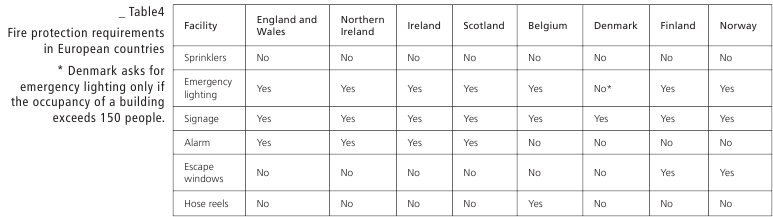
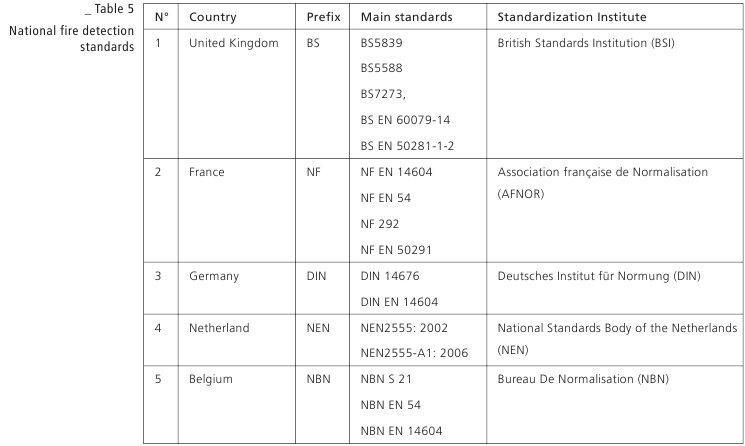
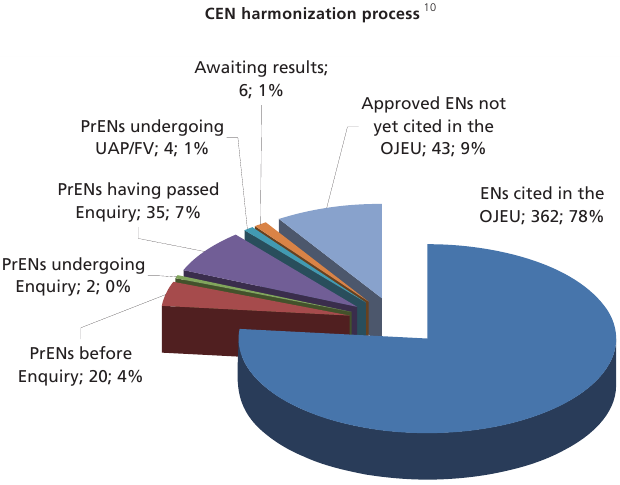
Standards EN 14604 and EN 54 cover all technical requirements for fire detectors and their components and their compliance is mandatory in all EU countries from the 1st of August 2008. Besides that, most European countries issue their own national technical standards, strengthening and also making changes to European standards. To enforce such, most countries involve their own national institutes of standardization and their certi? cation bodies designated to bring standards in line with the characteristics of each country and carry out certification of producers in accordance with national specifications. 3.2. National Legislation Most EU countries now have their own national legislation of fire protection of premises, but not for residential buildings. The volume and rigidity of legislation caused to the presence of mandatory requirements for installation of fire protection. Currently, such requirements exist in several European Union countries. In the UK an act to equip premises with fire detector came into force in 1991. All homes that were built from 1992 forward are required to have at least one main smoke detector on every floor. Thanks to this law the number of homes equipped with smoke detectors increased by more than 45%. Currently the more than 82% of all homes are equipped with a fire detector and it is proven that fires decreased significantly. The UK has set de facto standards. Its Institute for Standardization has developed and improved technical standards for fire equipment which has become the standard for other countries in the European Union and used in their legal basis for fire protection. Today only a few European Union countries (Britain, Netherlands, France, Finland, and partly Germany and Belgium) have a legislative requirement to install smoke detectors in residential buildings and every year their positive experience attracts more countries to introduce such practices. Table 4 illustrates the legal requirements of some European countries in the field of fire protection.7 In most European countries, the national technical standards are based on the European or British standards. Each country makes changes according to national characteristics and the need to strengthen existing regulations. Table 5 provides an overview of national technical standards for ?re detectors in some European countries. At first glance it seems that national standards are not so important for manufacturers and suppliers of fire protection equipment, while compliance is voluntary in line with the European principle of free moving goods. European reality is however much more complicated. Each European country has its own certification procedure of fire protection equipment up to national standards, ofcially set to provide additional proof of quality, reliability and conformity of products with national legislative requirements. Significant differences in the standards of different countries and differences in certification requirements make certification a painful exercise. Certification takes a lot of time, is sometimes difficult and is an expensive process slowing down the free movement of goods. Certification hinders fair competition, because it reduces the number of players in the market and hinders implementation of national fire prevention programs. The only correct way out of this national market protection practices is European harmonisation on an unified approach to the certification of fire protection products throughout the European Union. 4. Need for European harmonisation Harmonized European standards have a prominent role in the opening up of public procurement markets 8 and the realisation of the Single Market. Through harmonisation technical barriers to trade are eliminated and are a tool to obtain the full economic benefits of the European internal market. The harmonisation of European standards is an economic objective in their own right. It allows the free move of goods with CE mark in the European Union and creates a fair playing field for increased internal trade and for European economic growth in general. The latest approach to technical harmonization and standardization in the EU refers to voluntary standards as the appropriate method of giving technical expression to the essential requirements of Community Directives. This legislation confines itself to laying down the essential requirements to which products must comply in order to ensure the protection of public health, of safety, of the environment or of the consumer. European standards are developed in respect of each Directive. 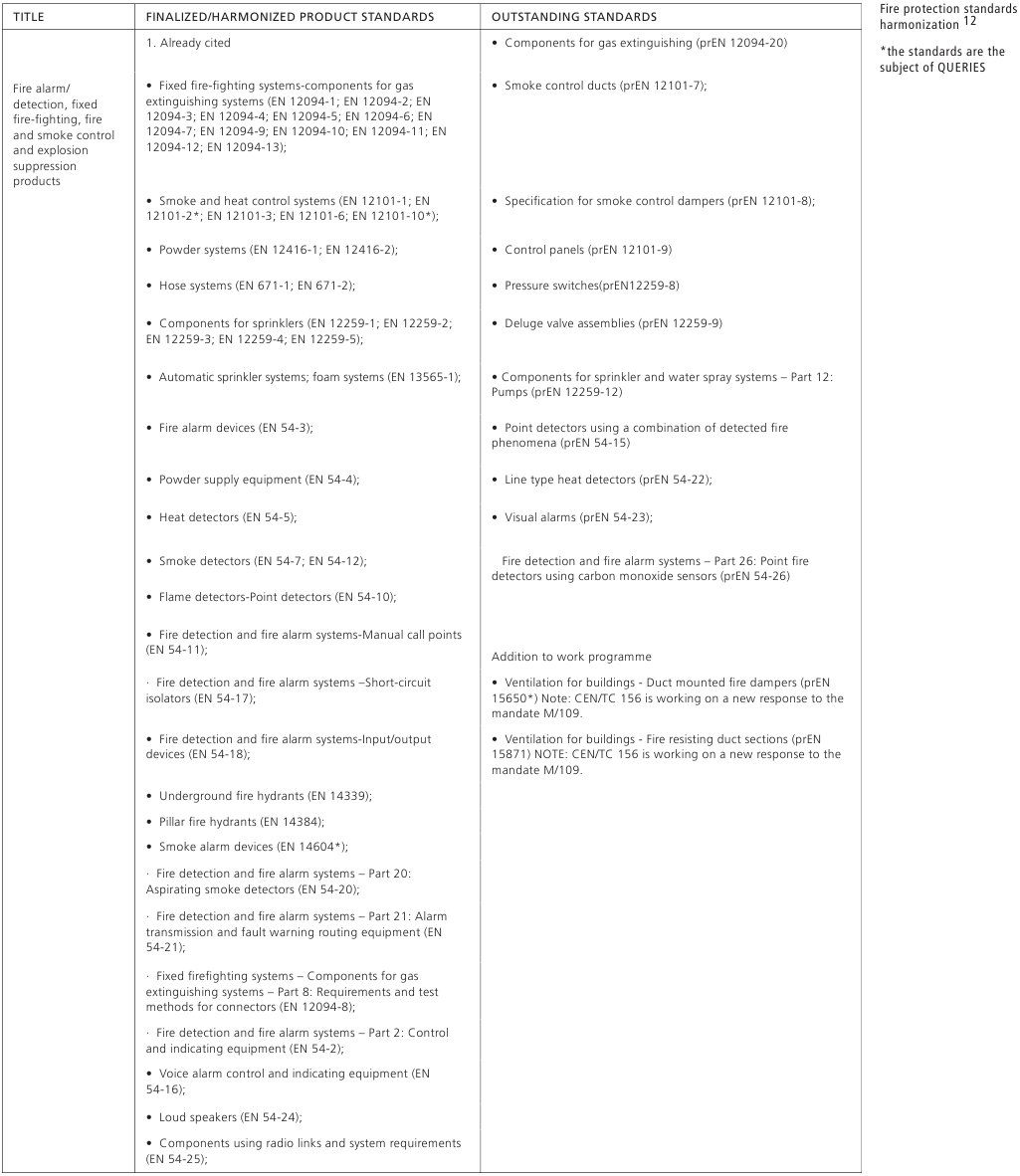
European standards are developed in order to provide manufacturers with a set of technical speci?cations recognized in the Directive to verify compliance with the essential requirements. The European standards concerned, the so-called “harmonized standards” remain voluntary. Manufacturers are still able to put products on the community market which either meet other standards or no standards at all, subject to fulfilling the procedures for assessment of conformity laid down by the Directive. The main motive for promoting any standardization activity is economic. The motivation for standardizing products, processes or services at the national level -namely, to reduce costs for producers and to improve transparency of the market for consumers – clearly exists at the European level. Given the current fragmentation of the European market, economic gains is much higher from European standardization than from previous national standardization. Common European standards reduce research, production and distribution costs for producers, and promote more intensive competition, to the benefit of consumers, in respect of the non-standard features of products. Today, different countries have their own methodology for testing and certi?cation of fire safety equipment. This creates a great inconvenience and problems in the classification and certificates recognition in some European countries. With the harmonization of technical standards for fire products all citizens can equally interpret and understand product requirements and will ensure that the product meets the legislation requirements. One of the major advantages of harmonisation for manufacturers is that agreed standards of testing a product in one country should apply throughout Europe. There will be no need to repeat tests in each country, allowing manufacturers to save costs and to bring products to the market at a more competitive price.
So far European harmonization on fire protection product standards has had already it benefits. Before the existing harmonisation level fire expertise was a pure national issue and investigations in the causes of fires were only carried out by nationals of the country in question. Before the harmonisation started it was difficult to ask forexperts from other countries because of the different existing methods. Thanks to common standards technical relationships have highly increased in fire investigations resulting in better insight in causes of fire and increased insights in how to prevent them. To address the problem of technical barriers to international trade caused by varying national standards, the EU adopted the Construction Products Directive (CPD)- 89/106/EEC- for the harmonisation of construction product standards. The differences are not great between the EU member states and where they are, reconciliation should not be too difficult. The biggest obstacle to harmonisation will be political rather than professional, with some countries not wishing to hand over any sovereignty at all (as is presently being experienced in the UK ) [6]. 5. What can house owners do? 1. Basic rules for all 11
2. Children
6. What can politics do? 1. Short term On the short term politics is able to decrease rapidly at least 10% of the number of deaths by home fires and implicitly decrease the accidental fire death and victims for a much longer period to come through:
2. In the medium term serious deficiencies found in private and communal buildings can be addressed by:
3. Long term These measures require strong political will and an important legislative work:
7. What has Luxembourg done? In 2008 there were more than 2300 fires occurred in Luxembourg13. An estimation of the costs of the damage caused by fires is each year tens of millions euro. Over 50 businesses suffer a fire every year in Luxembourg. More than half of these businesses close their doors in five years.14 In Luxembourg there are no national fire standards. Luxembourg applies European standards, especially the German DIN or VDE standards. Prescriptions on fire safety are also initiated from the Inspection of Labour for the so-called “classi? ed establishments” and from the Fire Prevention Of?ce of Luxemburg’s City Career Fire Brigade. General prescriptions - based on Belgian regulations - divide the buildings according to their height. Specific prescriptions – based on French and German regulations - make the difference between non-classified (all sorts of habitations) and classified establishments (for example the number of persons to be accommodated in a concert hall, surface of an office building...). There are also speci?c rules - based on the European directive for building materials - for all kinds of architectural / structural cases (eg restaurant, cinema, underground parking, etc.).15 Luxembourg intends to enhance the cooperation with the European Fire Protection Association because the CTIF Commission cooperates in the development of common security standards to achieve common standards in Europe. The guidelines are primarily designed for safety of ?rms and organizations, as well as fire departments or insurance companies. Today in Luxembourg the Kommodo-Inkommodo Act classi?es buildings according to their potential danger to people and the environment. However, recently the law was adapted to the purely environmental protection and now does not affect much in fire protection. In the nineties the Luxembourg government tried to create a National fire protection Act but that attempt failed. Today Luxembourg has no proper fire protection legislation. Under the Kommodo-Inkommodo Law in 2003 a number of Directives governing fire safety were published. Today these Directives are used as technical regulations and therefore are not controlled by Brussels. Olga Mala Assystem, Luxembourg
|
 wants to have a long life should ?rst of all look into accident prevention.
 of attention in the headlines in newspapers, but fires are every day in the news headlines. And the measures to prevent fire are easy to take as well as for politicians as for all Europeans.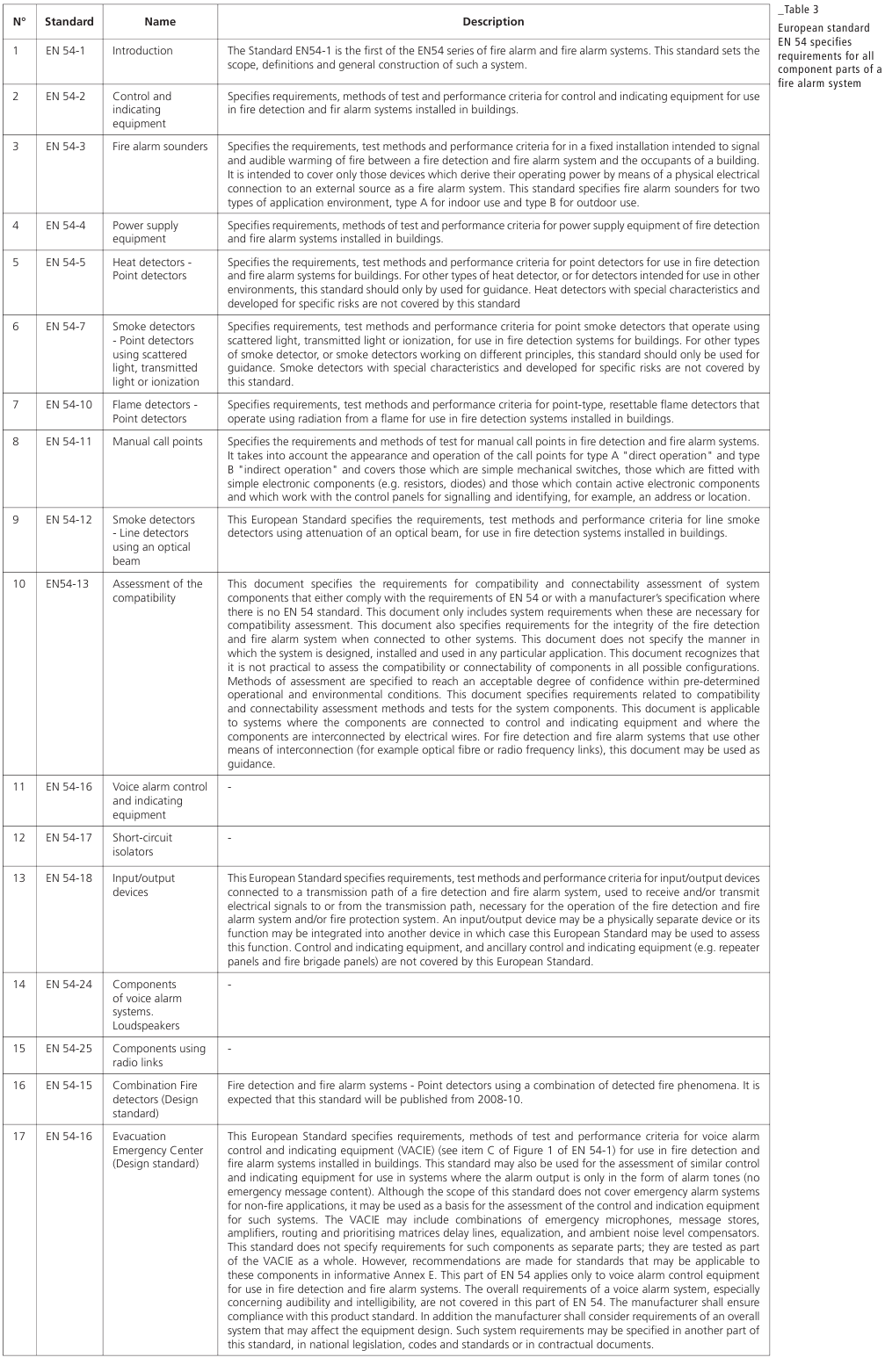
 The same holds for building standards. While national standards have helped to achieve quality in building, they vary widely from one Member State to the next and have acted as a technical barrier to international trade in construction products. Such barriers must be removed if there is to be more effective competition in the construction supply chain and on construction prices, within the EU Internal Market. 9